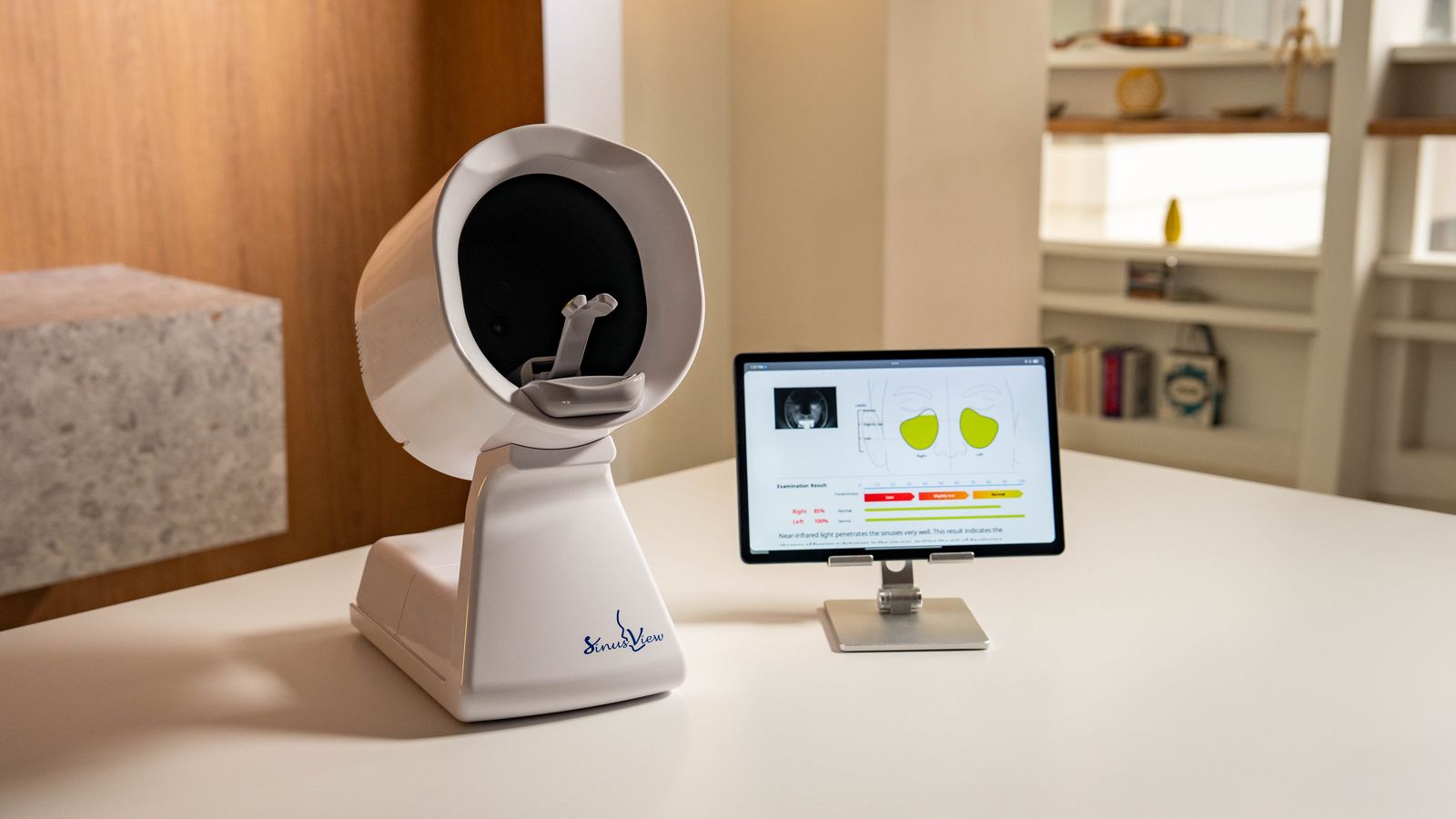
A point-of-care near-infrared imaging device that lets any primary care clinic check sinus status objectively — before deciding on antibiotics.
Most acute sinusitis is viral. But primary care has no practical way to look inside the sinuses — so antibiotics are prescribed “just in case.”
of acute sinusitis cases are bacterial — most do not need antibiotics.
of US primary care physicians still prescribe antibiotics for acute sinusitis.
projected cumulative deaths attributable to antimicrobial resistance, 2025–2050.
Near-infrared light travels through bone and soft tissue. Air-filled sinuses glow; sinuses filled with fluid or mucus stay dark. SinusView Air captures and scores that difference.
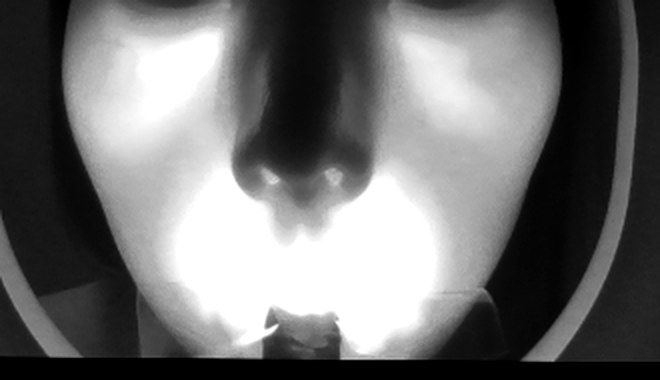
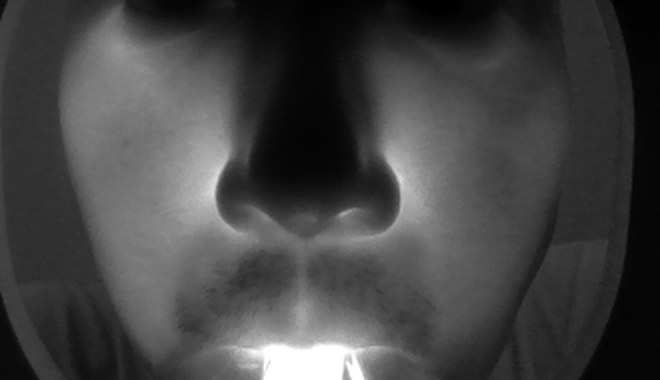
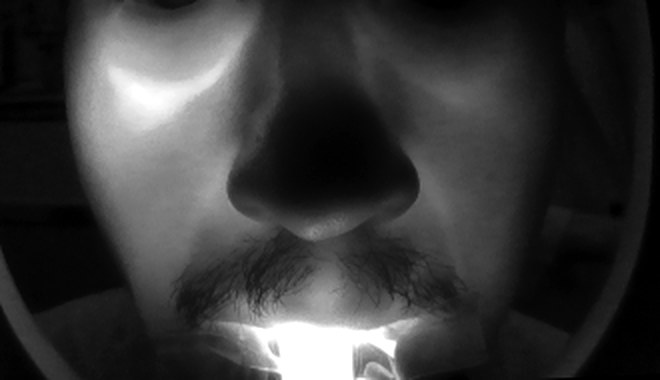
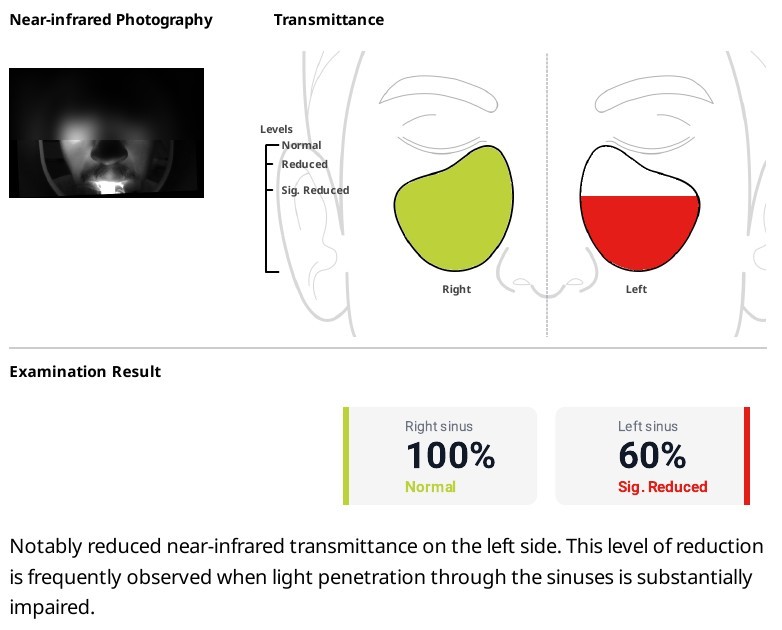
Light from the mouthpiece passes up through the palate. Bright cheeks = air-filled sinuses; a darker side = reduced transmission. Values from the device report. Images cropped for privacy.
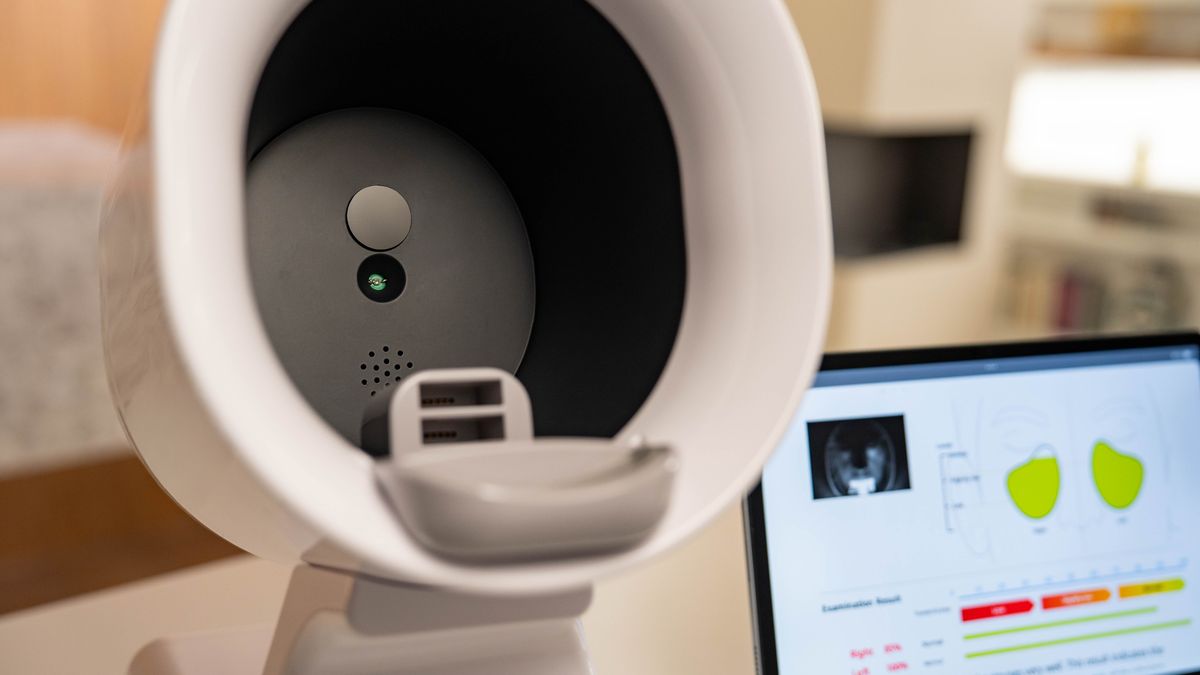
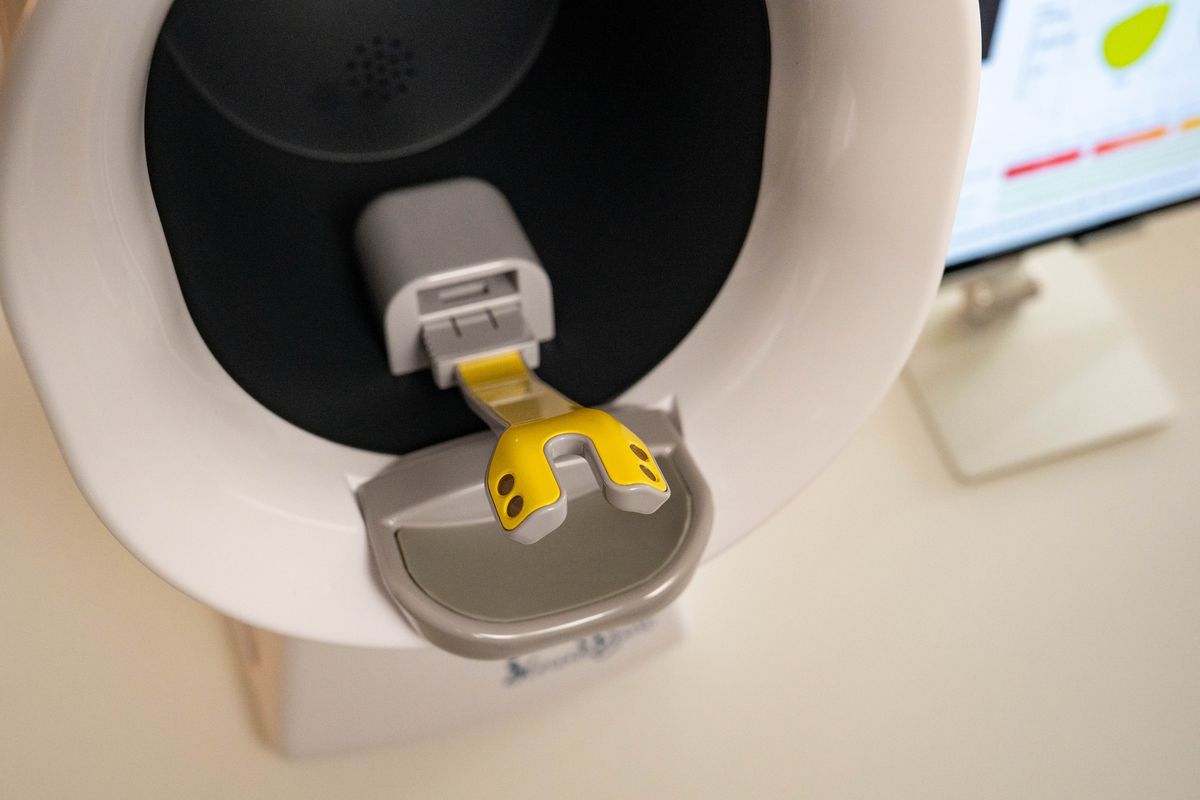
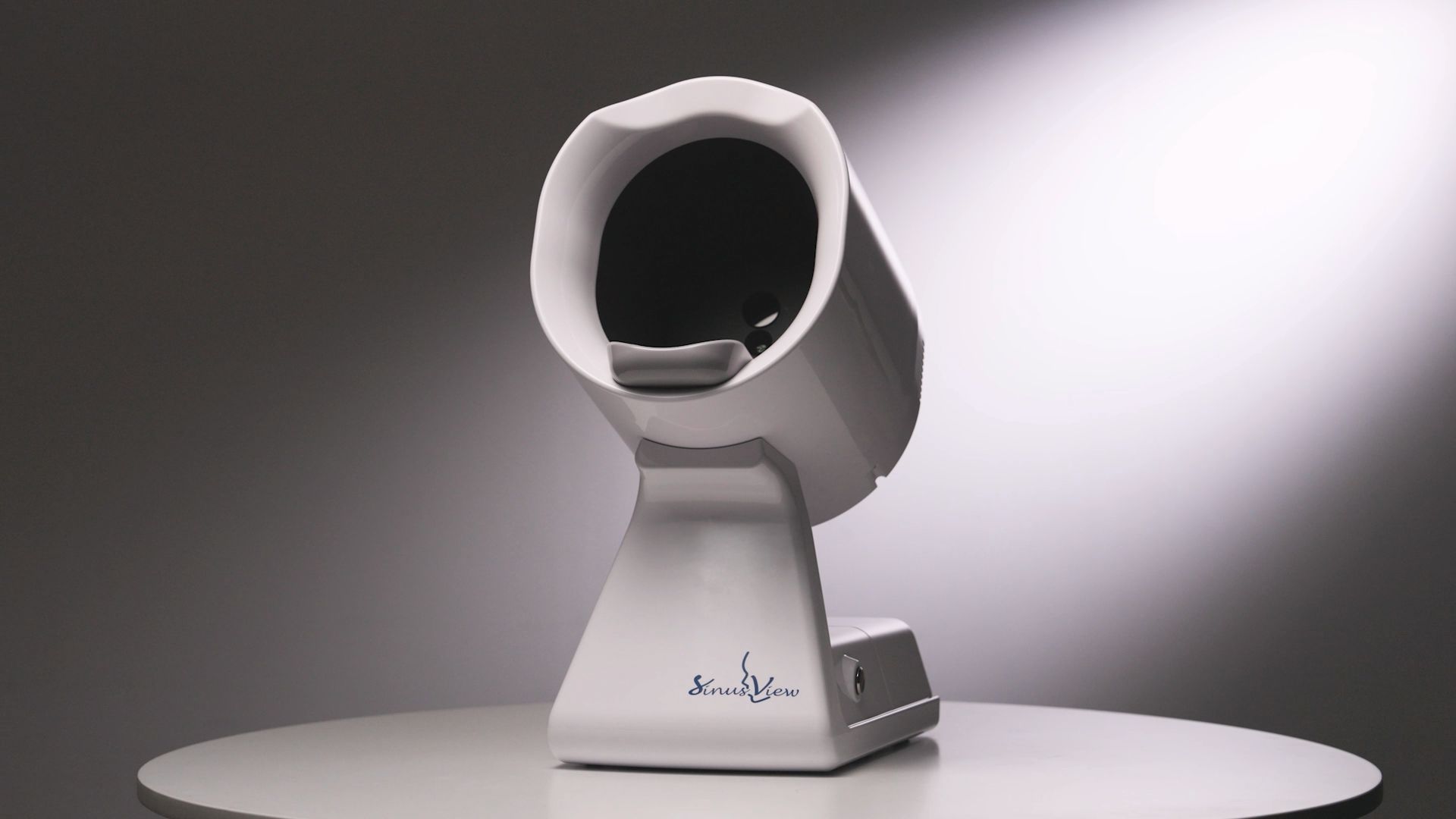
The patient rests their face in the cradle and gently bites a single-use NIR mouthpiece. Adult and pediatric sizes.
LEDs in the mouthpiece illuminate the maxillary sinuses from inside; a night-mode camera captures the light pattern. Built-in quality checks prompt a retake if positioning is off.
Left and right sinuses are each graded Normal / Mild / Severe with a score and the source image — ready to explain to the patient in seconds.
Analysis runs on the tablet. No server or internet connection needed — ideal for markets with limited connectivity.
A compact, second-generation design built for the primary care desk — internal medicine, pediatrics, ENT, family practice and health-check centers.
IRB-approved prospective study at Kosin University Gospel Hospital, Department of Otolaryngology, with CT as the gold standard (2020–2022).
SinusView v2.0, Kosin University Gospel Hospital ENT, 2020–2022. CT read by the site’s ENT department as reference standard.
Complete performance data (including sensitivity and NPV), protocol and statistical methods are shared with qualified distribution and clinical partners on request.
Request clinical summary →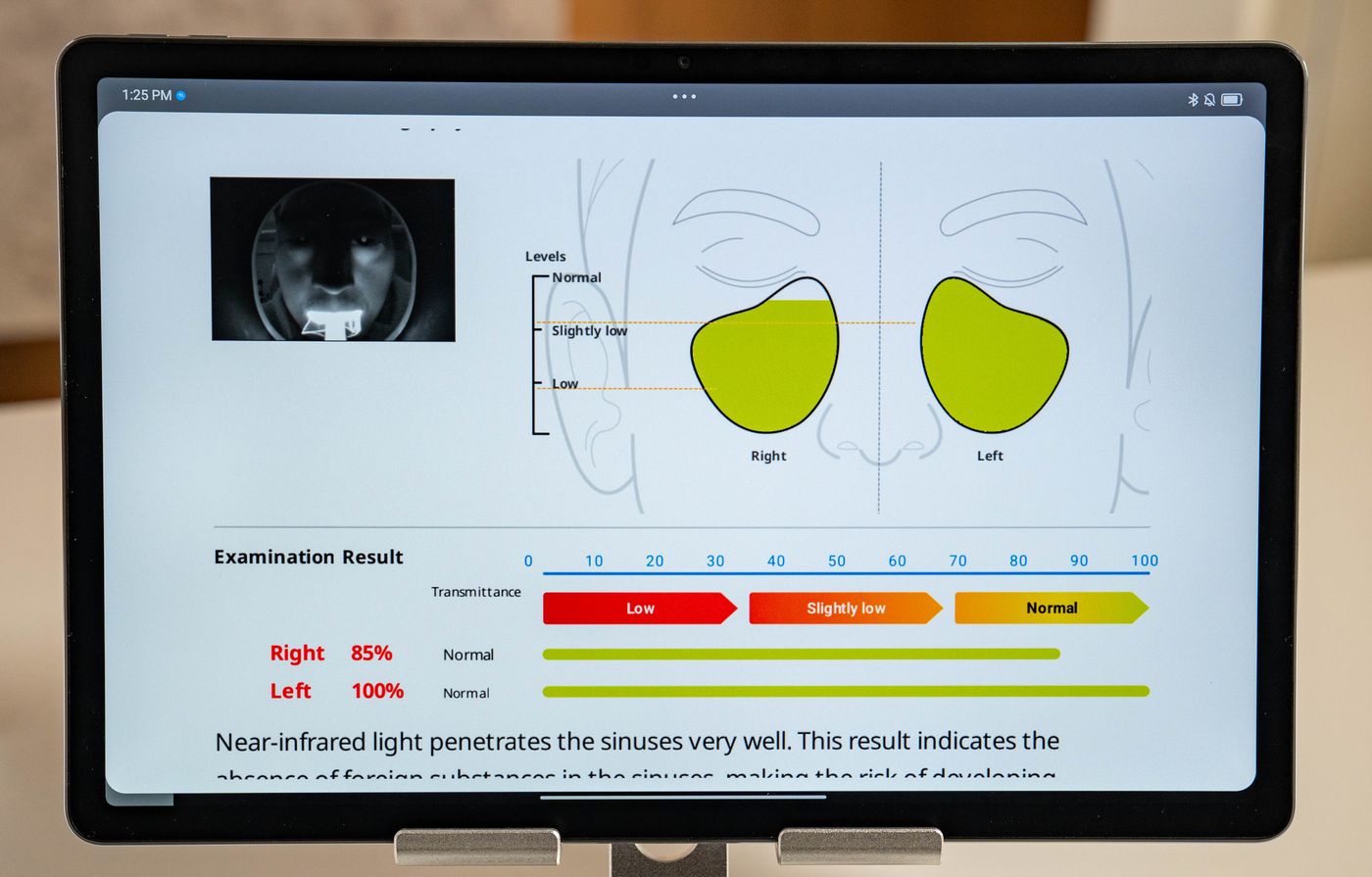
Intraoral near-infrared transillumination of the maxillary sinuses has been studied at the University of California, Irvine (Beckman Laser Institute and Department of Otolaryngology) since 2010. Our co-founder Dr. Joon You (highlighted) contributed to this work.
These studies used research prototypes, not SinusView Air. They describe the underlying method; SinusView’s own performance data are shown above.
| SinusView Air | X-ray | CT | Endoscopy | |
|---|---|---|---|---|
| Cost | ||||
| Equipment cost | $ — a fraction of X-ray | $$ | $$$$ | $$ |
| Running cost | Low — disposable cover per exam; no radiation compliance | Radiation safety program, maintenance | High — service contract, staffing | Scope reprocessing after every patient |
| Operation | ||||
| Exam time | ~10 seconds | Minutes | Minutes + radiologist reading | Minutes |
| Operated by | Any clinic staff — learned in 5 minutes | Radiographer | Radiographer + radiologist | ENT specialist |
| Space needed | Desktop, any exam room | Shielded X-ray room | Shielded CT suite | ENT treatment unit |
| Repeat at follow-up | Every visit | Limited by radiation | Rarely | Possible, uncomfortable |
| Safety & comfort | ||||
| Radiation | None | Low dose | Higher dose | None |
| Patient experience | Bite a mouthpiece, non-invasive | Non-invasive | Non-invasive | Scope inserted into the nose |
| Diagnostic performance | ||||
| Specificity vs CT | 93.7%1 | ≈88%2 | Reference standard | ≈75%3 |
| What it shows | Left/right maxillary transmission score | 2D image, limited soft-tissue detail | Full 3D — reference standard | Nasal cavity and sinus openings; the lower maxillary sinus is not visible |
SinusView Air is a point-of-care aid for assessing maxillary sinus status; CT remains the reference standard and results should be interpreted by a clinician. Cost tiers are indicative. Figures come from different studies and populations, not a head-to-head trial.
1 SinusView v2.0, prospective IRB study vs CT, Kosin University Gospel Hospital ENT, n=225. 2 Plain radiography vs CT for maxillary sinus abnormalities, as cited in Cerussi et al., J Biomed Opt 2015. 3 Nasal endoscopy vs CT, as cited in Abouzari et al., Ann Otol Rhinol Laryngol 2022.
Summarised from clinic visits by our team. Clinics are not named.
Showing the score fall between visits gives patients visible proof that treatment is working.
ENT clinic, GyeonggiSeeing how much the sinus is filled — and that it takes two to three weeks to clear — markedly improves medication adherence.
ENT clinic, SeoulWe use it to separate simple rhinitis from sinusitis that may need antibiotics during the cold season.
Family medicine clinic, SeoulUnlike an X-ray, it is easy to recommend — and it can be repeated as often as needed.
Korean medicine clinic, SeoulA fraction of the cost of X-ray or CT equipment, with a low per-exam consumable cost. Clinics earn per exam with minimal staff time; distributors build recurring revenue.
One-time purchase. Fits any consultation room; operated by nurses or assistants after brief training.
Firmware-authenticated mouthpieces, 400 exams each. Usage is counted automatically — genuine parts only.
At 100 exams a month, overseas clinics typically recover the device cost in about 4–5 months.
Our Korean approvals support partner-led registration in each market, keeping time and cost to market low.
| Certification | Number | Scope | Status |
|---|---|---|---|
| MFDS Class I | 26-1067 | SinusView Air | Registered · Sep 2026 |
| ISO 13485 | RMDM0047 | Design & manufacture of non-invasive imaging devices | Valid to 2028 |
| Korea GMP | KTR-ABBA-21797 | Medical device manufacturing quality | Valid to 2027 |
| India | — | Local registration via distribution partner | Registered · Oct 2026 |
| Indonesia | BPOM | Via idsMED | Expected Dec 2026 |
A competitor would have to build the device first — and that step is covered by registered patents.
Proven at scale in Korea, now entering markets with high primary-care demand and accessible regulatory pathways.
275,000+ exams at health-check centers, plus ENT, internal medicine, pediatrics and Korean medicine clinics.
Partnered with idsMED, one of ASEAN’s largest medical device distributors.
Device registration completed in October 2026 with our local partner.
Japan, China, Australia, Southeast Asia, Europe and Latin America.
Exclusive territories available. Korean approvals support your local registration.
Founded in 2017 at UNIST, Korea. We build optical diagnostic devices that bring objective imaging to primary care.
POSTECH Ph.D. · NIH postdoc · former Head of R&D (EVP), Daewoong Pharmaceutical
M.S. Biomedical Optics, MIT · 17 years in LG Electronics’ medical device business
Founded at UNIST · Selected for Korea’s TIPS program
GMP certification · MFDS Class II approval
Strategic investment from Kakao Healthcare · Deployed across a national health-check network (8 centers)
Nationwide rollout to local clinics · Exclusive distribution agreement with idsMED (Indonesia)
TIPS Deep-Tech R&D (KRW 1.5B) · MedTech Innovator APAC — Korea #1 · SinusView Air MFDS registration · India registration
Distribution, clinical collaboration or investment — tell us about your organization and we’ll reply within two business days.
Download product brochure (PDF) ↓
